
Key Takeaways
- Organizing your benefits paperwork increases security and confidence for you and your family.
- Regular maintenance and clear communication about storage prevent confusion during important life events.
Keeping your family’s benefits documents in order isn’t just about being tidy—it’s about making sure you, your spouse, or loved ones can find exactly what you need, when it matters most. With these nine tips, you’ll learn how to bring order, peace of mind, and long-term clarity to managing your paperwork.
Why Organize Benefits Documents?
Importance for Federal Employees
- Also Read: FEGLI vs Private Life Insurance—Decision Framework: Key Factors to Compare
- Also Read: Case Study: How Contribution Limits Shape Federal Retirement Savings in 2026
- Also Read: Best Federal Retirement Advisor: Key Steps for Choosing and Questions to Ask
Potential Risks of Disorganization
Disorganized paperwork can add unnecessary stress during already challenging times, such as illness, retirement transitions, or the loss of a loved one. Lost, incomplete, or inaccessible documents may delay benefits, interrupt healthcare coverage, or complicate survivor claims. Organization helps prevent these issues and supports your family’s well-being.
Tip 1: Gather All Benefits Paperwork
List Common Federal Benefits Documents
Begin by collecting everything related to your employment and retirement benefits, such as:
- Retirement plan statements (pension and savings info)
- Federal Employees Health Benefits (FEHB) program paperwork
- Federal Employees’ Group Life Insurance (FEGLI) forms
- Social Security records
- Beneficiary designations
- Thrift Savings Plan (TSP) statements
- Pay and annuity statements
- Survivor benefit paperwork
- Military service records (if applicable)
- Annual open season notifications
Which Documents Are Most Important?
Not all paperwork holds the same weight. Prioritize originals or official copies of forms related to active coverage, beneficiary designations, military records, and retirement eligibility. You’ll need these documents for benefit claims and survivor support.
Tip 2: Create a Simple Filing System
Physical Versus Digital Organization
Decide whether you prefer a physical file cabinet, a digital system, or a hybrid approach. Physical files offer easy access for those less comfortable with technology; digital files provide quick sharing, enhanced security, and backup options.
Choosing the Right Storage Solution
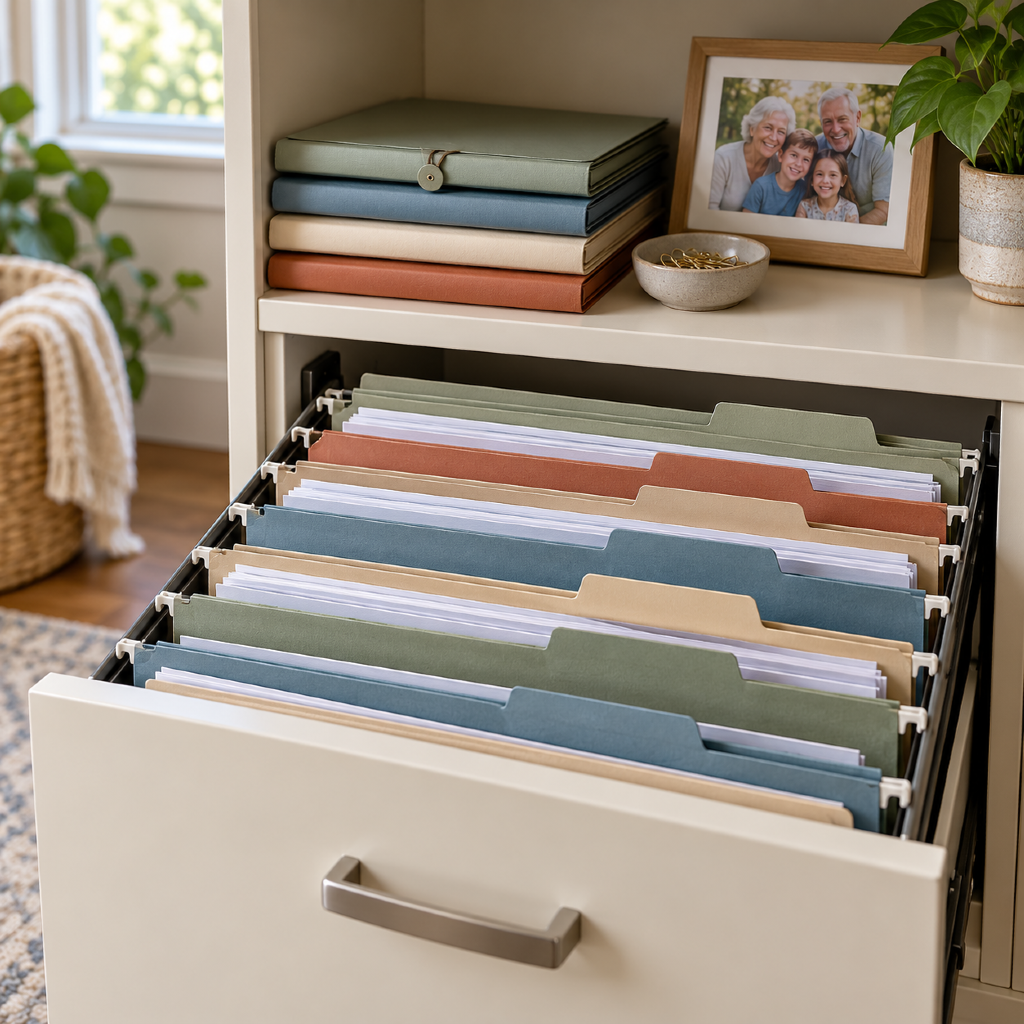
Use labeled folders or a clearly sectioned binder for physical storage. Make sure your digital files are organized by folder (e.g., “Healthcare,” “Retirement,” “Survivor Benefits”) and secured on a protected device or cloud platform. Ensure only trusted family members have access.
Tip 3: Separate Family Member Files
Why Individual Files Matter?
Organizing each family member’s benefits paperwork separately prevents confusion between plans and coverage. It’s especially crucial if your spouse and children are enrolled as dependents or have unique benefit elections.
Best Labeling Practices
Label folders or digital directories with full names and a brief description (e.g., “John Doe – FEHB Enrollment 2026”). Use color coding or tabs to distinguish between each person. Consistent labeling streamlines retrieval during emergencies.
Tip 4: Use Secure Digital Backups
How to Digitize Important Documents
Scan or photograph key documents using a secure scanner or trusted smartphone app. Save files in organized folders, using standardized naming conventions (like “LastName_BenefitType_Year”). PDF format is easy to read and share across platforms.
Ensuring Data Privacy and Security
Protect digital backups with strong passwords or encryption. Use reputable cloud storage with multi-factor authentication, and limit sharing to only the people who need it. Never email sensitive benefits documents unencrypted.
Tip 5: Regularly Review and Update Files
How Often Should You Review?
Review your benefits documents at least once a year—ideally after annual open season or major life events (retirement, marriage, new dependents). This ensures your records stay current and complete.
What Changes Should You Track?
Update files whenever you:
- Change beneficiaries
- Add or remove dependents
- Adjust retirement plans
- Receive new official documents or correspondence
- Experience status changes (such as military service updates or address changes)
Tip 6: Communicate Document Locations
Who Needs Access to These Records?
At minimum, your spouse and primary family caregivers should know where you keep benefits documents. If you work with an attorney or a trusted advisor, consider their access too, always maintaining privacy and security.
Methods for Sharing Securely
Share the physical location of papers clearly and discreetly—either with written instructions in a known spot or via a secure communication method for digital files. Avoid leaving sensitive information where it could be found accidentally or accessed by unauthorized individuals.
Tip 7: Shred Unnecessary or Expired Papers
Which Documents Can Be Discarded?
You can usually safely shred outdated forms (like old plan elections or expired ID cards), duplicate statements, and non-essential correspondence if they no longer support claims or provide coverage information.
Secure Destruction Best Practices
Always use a cross-cut shredder for physical papers containing personal information. For digital files, use file-shredding software that permanently deletes and overwrites data before disposing of old hard drives or USB drives.
Tip 8: Use Checklists for Annual Tasks
Sample Checklist Ideas
Create a simple annual checklist for tasks like:
- Confirming beneficiaries
- Verifying contact and enrollment details
- Updating healthcare and life insurance coverage
- Reviewing TSP and pension statements
- Collecting current documentation from HR
Checklists keep your routine organized and help you avoid missed deadlines.
Benefits of Staying Consistent
Consistent organization and annual review keep you prepared, reduce risk, and minimize extra work during transitions. Families gain peace of mind knowing everything is up to date and easy to access.
Tip 9: Where Can You Find Help?
Federal Employee Resources
Seek information and assistance through your agency’s human resources office, online federal employee portals, OPM guidance, or official retirement websites. These sources provide forms, checklists, and educational materials tailored to your specific benefits.
Professional Document Organization Services
If managing paperwork feels overwhelming, some professionals offer document organization support. Choose services familiar with federal employee benefits and data privacy requirements to ensure compliant, effective help.
What Questions Do Families Commonly Ask?
FAQs on Benefits Paperwork
Families often ask what to keep, how long to retain documents, and where to find copies in an emergency. Address these by keeping a summary sheet of critical papers and their locations, along with agency contact information for quick access.
How to Minimize Family Stress
By staying organized, communicating clearly, and scheduling regular updates, you significantly reduce the burden on your family during challenging times. Preparation and order ensure everyone can focus on what truly matters: each other.