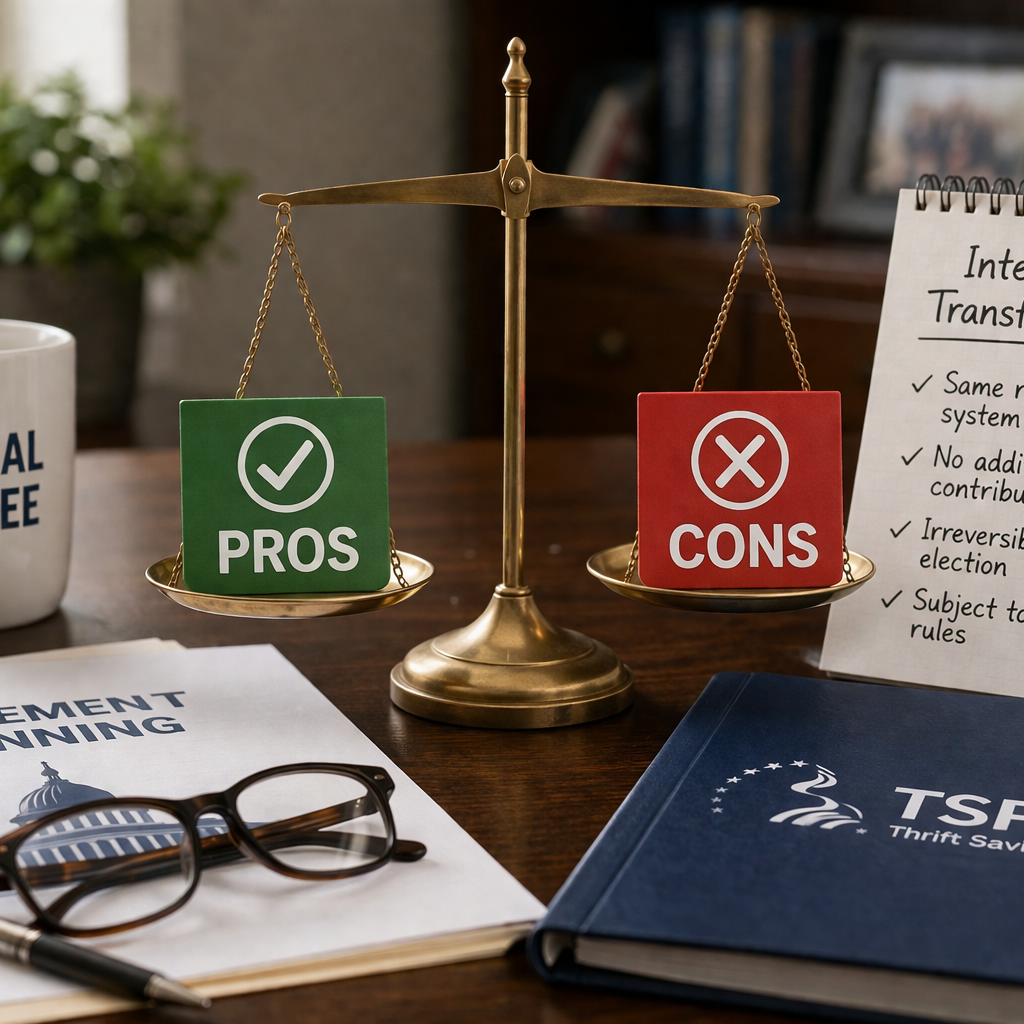

Pros & Cons of Interfund Transfers for Federal Retirees: Rules and Insights
Key Takeaways
- Interfund transfers offer greater flexibility and control for federal retirees managing their retirement funds.
- Understanding transfer rules and limitations is vital to avoid potential risks and maintain long-term retirement readiness.
If you’re a federal retiree or planning for retirement, understanding how interfund transfers work is vital. These transfers can play an important role in shaping your financial future, but they also come with specific rules and important considerations that can impact your long-term plans.
What Are Interfund Transfers?
Understanding Interfund Transfers
- Also Read: Postponed vs Deferred Retirement: Key Differences and Federal Employee Eligibility
- Also Read: 7 Key Pros and Cons of Military Buyback for Federal Retirement Planning
- Also Read: Reduction in Force (RIF) and Benefit Impacts: What Federal Employees Should Know
How Federal Retirees Use Transfers
Federal retirees commonly use interfund transfers to maintain a balance between growth potential and risk management. For example, you might decide to shift from more aggressive investment funds to more conservative ones as you near or enter retirement. This flexibility allows you to realign your portfolio as your needs, risk tolerance, or economic conditions change, ensuring your strategy stays consistent with your retirement objectives.
Why Consider Interfund Transfers?
Common Retirement Planning Goals
As you approach retirement or settle into your post-career years, your investment priorities often shift. Interfund transfers let you adjust your holdings to match goals such as safeguarding principal, generating income, or seeking some level of growth. This tool enables you to adapt to the evolving financial landscape without requiring outside transactions or complicated paperwork.
Flexibility for Changing Needs
Life rarely goes according to plan, especially when it comes to retirement. Unexpected changes in health, family circumstances, or the broader economy can alter your financial outlook. Interfund transfers provide an accessible and efficient way to respond. You can decrease exposure to volatile investments during uncertain times or capture growth opportunities by allocating more into certain funds when the market outlook improves—all within regulated plan rules.
Rules for Federal Retiree Transfers
Eligibility Requirements Explained
Most federal retirees are eligible to make interfund transfers if they have an active government-sponsored retirement account. Typically, the option becomes available once you are vested in your benefits, but always review your plan documentation for specific guidelines. These rules apply whether you are still working, have just retired, or are well into your post-employment years.
Key Restrictions and Deadlines
While interfund transfers add flexibility, they aren’t completely open-ended. Most plans limit the number of transfers you can make within a month—commonly allowing unlimited reallocations between certain types of funds and possibly one or two transfers per month into less liquid options. You must also observe official deadlines; many plans require you to submit transfers by a set cut-off time for next-business-day processing. Additionally, some transfers may be subject to short-term trading restrictions if they are done too frequently.
What Are the Benefits?
Empowering Retirement Flexibility
One clear benefit of interfund transfers is the ability to quickly shift your investment approach based on your evolving needs. If the market outlook changes or your risk comfort shifts, you aren’t locked into your original fund choices. This type of adaptability helps you stay proactive, rather than reactive, in managing your retirement assets.
Enhanced Control Over Investments
Interfund transfers also empower you to take a more hands-on role in your retirement journey. You can spread your savings across income, growth, or stable value funds, tailoring your allocation to your specific retirement phase. This flexibility helps you maintain confidence that your investments reflect your most current priorities, all while keeping your assets inside your tax-advantaged retirement account.
What Are the Drawbacks?
Potential Risks to Consider
With added freedom comes added responsibility. Making frequent, emotionally driven transfers can harm your long-term results by exposing you to market timing risks. Moving in and out of funds in reaction to short-term events may mean missing key periods of recovery or growth. It’s important to remain disciplined and avoid letting news headlines dictate your decisions.
Understanding Transfer Limitations
Federal retirement plans set limits to protect the long-term interests of all participants. Transfer restrictions are designed to prevent disruptive trading that can undermine the plan’s stability or drive up costs. If you exceed the allowed number of interfund transfers, you may face waiting periods before you can make additional changes. These rules are enforced to support a fair and transparent investment environment for all retirees.
How Do Interfund Transfers Affect Long-Term Plans?
Impact on Retirement Readiness
Your ability to make thoughtful interfund transfers can ultimately influence your retirement security. Properly timed and well-reasoned reallocations may help preserve your account balance during volatile periods or help you capture gains during growth cycles. However, making hasty or uninformed decisions can disrupt your strategy, so it’s critical to define your objectives and make transfers that support your overall plan.
Strategies for Managing Change
Managing interfund transfers effectively starts with a clear understanding of your retirement timeline, income needs, and risk preferences. Regularly review your account with these elements in mind. If you’re unsure about your choices, consider seeking guidance from educational resources or retirement planning professionals—not for specific investment advice, but to become more comfortable with broad planning concepts. Staying informed will help you maneuver change with greater confidence, while avoiding the pitfalls of impulsive decision-making.