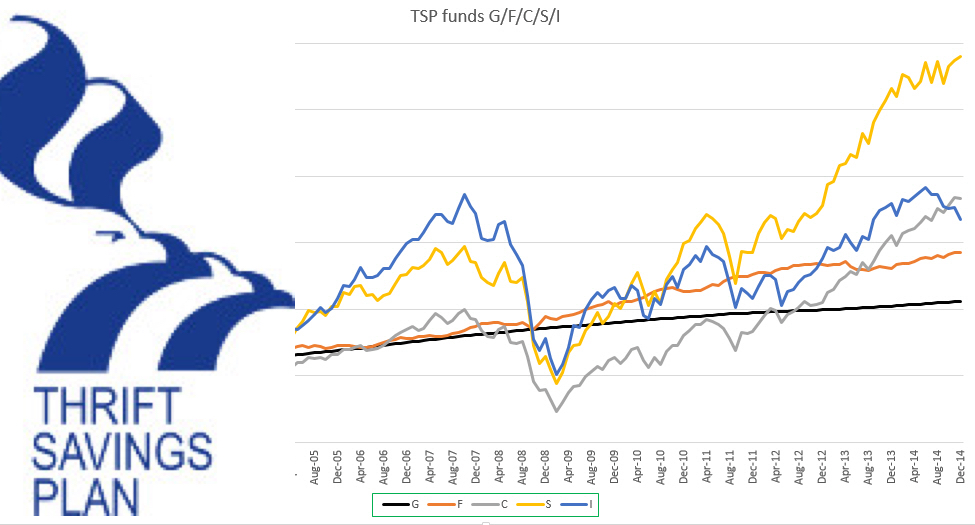

[vc_row][vc_column width=”2/3″ el_class=”section section1″][vc_column_text]End-of-year TSP fund returns have already been announced. Not long from now, the accrued and weighted ten-year returns will also be released by the Thrift Board, and this will undoubtedly illustrate that even though its annual returns are at 13.43 percent, the I Fund will soon be greater than the C and F funds.
Last year, on December 31st in 2017, the ten-year period showed us that the I Fund was placed last out of the five basic funds. This year, on December 31st in 2018, that same I Fund will now find itself in third. Logically you’d think that the I Fund had a good year this year. It did not. In fact, out of all five funds, the I Fund performed the worst this year.
- Also Read: Divorce and Your Federal Pension—What Happens When You Split Assets and How It Could Affect Your TSP
- Also Read: What Happens to Your Federal Benefits After Divorce? Here’s the Lowdown
- Also Read: The Best FEHB Plans for 2025: Which One Fits Your Lifestyle and Budget the Best?
Example, let’s look at the information found in the C Fund’s “fund sheet” that was found on the TSP website. From January 1988 when it was activated, until December 2017, the average return of the C Fund is 10.53 percent.
But this statistic, while accurate, doesn’t predict where the fund may go. Just look at 2008 again, when the C Fund dropped by 36.99 percent. Or what about 2013, when it grew 32.45 percent? The problem being any adviser to your finances can focus on either statistic to justify their advice. One who wants you to “buy and hold” would look at the fund’s long-term return, and one who thinks equity-indexed annuity is the best investment would instead look at the percentages from 2008. And to top it all off, either of them could be wrong.
What is the best play here then? Firstly, any predictive value of any percentage statistic should never be assumed. After that, you should seek out a financial adviser and work out a strategy that is catered to you specifically. Lastly, putting in as much as you can to the TSP is a long-term investment, and it should always pay off.[/vc_column_text][/vc_column][vc_column width=”1/3″][vc_single_image image=”36269″ img_size=”292×285″ style=”vc_box_shadow”][/vc_column][/vc_row]