Key Takeaways
- The Government Pension Offset can reduce Social Security benefits for public employees who receive a government pension.
- Understanding GPO rules and coverage is crucial for effective retirement and Social Security planning.
- Also Read: How Do Deposit and Redeposit Service Buybacks Work for Federal Employees?
- Also Read: Top FERS Benefits Expert: Pros & Cons of Comparing Federal Retirement Plans
- Also Read: Best CSRS Retirement Planner Trends: Comparison and Key Planning Factors 2026
What Is Government Pension Offset?
GPO policy background
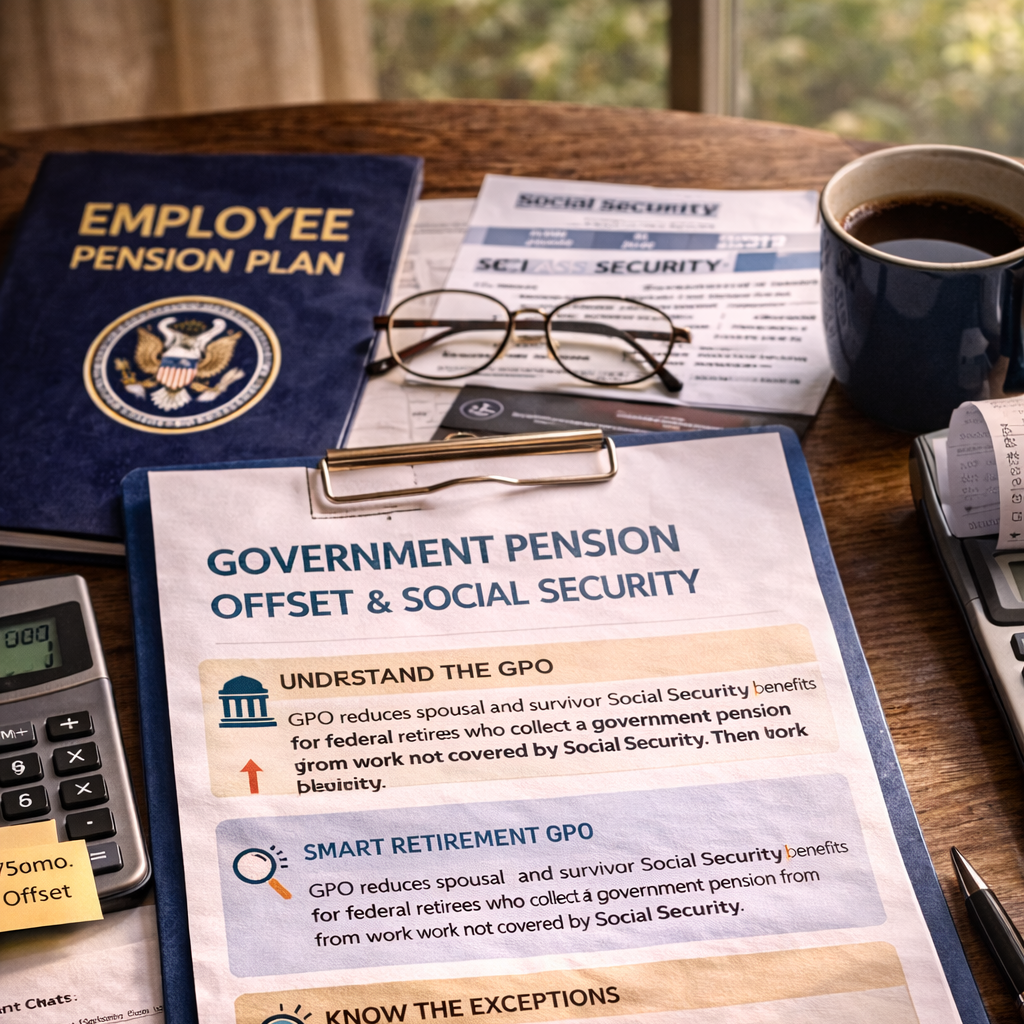
The Government Pension Offset (GPO) is a federal regulation that reduces certain Social Security benefits for people who also receive a government pension from employment not covered by Social Security. GPO was created as a way to ensure that the Social Security program remains fair and balanced for all beneficiaries. If you have a government job where you did not pay Social Security taxes, such as many state and local public service positions, a portion of your Social Security benefit could be offset.
Why GPO was established
GPO was implemented to address concerns about “double-dipping,” where individuals receive both a full government pension and full Social Security benefits based on a spouse’s record. The intention was to prevent some retirees from collecting both benefits in a way others could not. By reducing Social Security spousal or survivor benefits for those with a non-covered government pension, the Social Security Administration aimed to create more balance between public and private sector retirees.
How Does GPO Affect Social Security?
Impact on spousal and survivor benefits
The main area where GPO comes into play is with spousal and survivor benefits from Social Security. If you qualify for a pension based on work where you did not pay Social Security taxes, GPO can reduce the amount of Social Security benefits you can claim as a spouse or survivor. The reduction is calculated based on the amount of your government pension, not your work history with Social Security. This means your benefit as a spouse or surviving spouse may be significantly reduced or, in some cases, eliminated.
Who is subject to GPO rules
Generally, you are subject to GPO if you receive a government pension from federal, state, or local employment that did not require you to pay Social Security taxes. This usually affects:
- Federal employees with service only under the Civil Service Retirement System (CSRS), not covered by Social Security
- Many teachers, police officers, or firefighters in states where public pension systems are outside of Social Security
- Some local government workers
If you have a mixed career (some years paying into Social Security and some not), you may still be subject to the GPO depending on your employment history and pension structure.
Who Is Impacted by GPO?
Examples of affected public servants
While not all public employees are affected by GPO, those who worked in positions not covered by Social Security are at risk. Examples include:
- Federal retirees under CSRS who did not switch to the Federal Employees Retirement System (FERS)
- Public school teachers in states like California, Texas, and Illinois whose pension systems operate independently
- Local police and fire department personnel in certain municipalities
- Some postal workers and other governmental positions with “non-covered” status
Key retirement program intersections
GPO mainly interacts with two retirement systems:
- Civil Service Retirement System (CSRS): Older federal employees who earned their pensions exclusively under CSRS and did not pay Social Security taxes are typically subject to GPO.
- State or local government pensions: If your position was exempt from Social Security, any pension received may cause a GPO reduction in spousal or survivor Social Security benefits.
Employees who worked under the Federal Employees Retirement System (FERS) generally are not impacted, as FERS includes Social Security coverage, but service time under CSRS can still trigger the offset if not transitioned fully to FERS.
Can You Avoid GPO Implications?
Exceptions and exemptions to know
There are situations where you may be exempt from the GPO. For example:
- If you were covered by both the government pension plan and Social Security for the last five years of your government employment, you may not be subject to GPO.
- Certain government jobs are covered by Social Security, meaning no offset would apply.
- Some international Social Security agreements or specific legislative changes can create additional exceptions, though these are less common.
Always confirm with your pension or benefits office to see if you meet any exemption criteria.
Alternative planning considerations
If you are nearing retirement and worried about GPO, make sure to evaluate all sources of your retirement income. You might consider ways to supplement your income beyond Social Security, such as voluntary retirement savings, private pensions, or part-time work. For married couples, it’s also useful to coordinate Social Security and pension strategies early to avoid unexpected reductions in benefits. Consulting a retirement specialist familiar with public employee pensions can help ensure you understand the full impact before making decisions.
What Questions Do Retirees Ask About GPO?
Common GPO scenarios
Many retirees want to know exactly how GPO may affect their benefits. Typical scenarios include:
- A retired teacher with a public pension asks whether she will receive spousal Social Security based on her husband’s work record.
- A former city employee receiving a non-covered government pension is unsure why their Social Security survivor benefit is lower than expected.
- Couples approaching retirement want to know how one partner’s non-covered pension will affect joint planning.
If you have a government pension and may receive Social Security based on someone else’s work record, GPO could apply to your situation.
Communicating with Social Security offices
If you believe you may be subject to GPO, reach out directly to your local Social Security office. Bring records of your employment history, pension plan details, and Social Security contributions. Ask specifically about the offset and how it might affect your spousal or survivor benefits. Social Security representatives can provide personalized, up-to-date information and help you complete any required forms. Being proactive ensures you have time to consider your options and plan accordingly.
Planning for retirement is complex, especially for government employees navigating both pensions and Social Security rules. Understanding GPO is a crucial step in preparing for your financial future, ensuring that you make informed choices about your benefits.