
Key Takeaways
- Coordinating earnings tests is crucial to avoid unexpected reductions in your retirement income.
- Policy changes and annual reviews can influence when and how your benefits are adjusted.
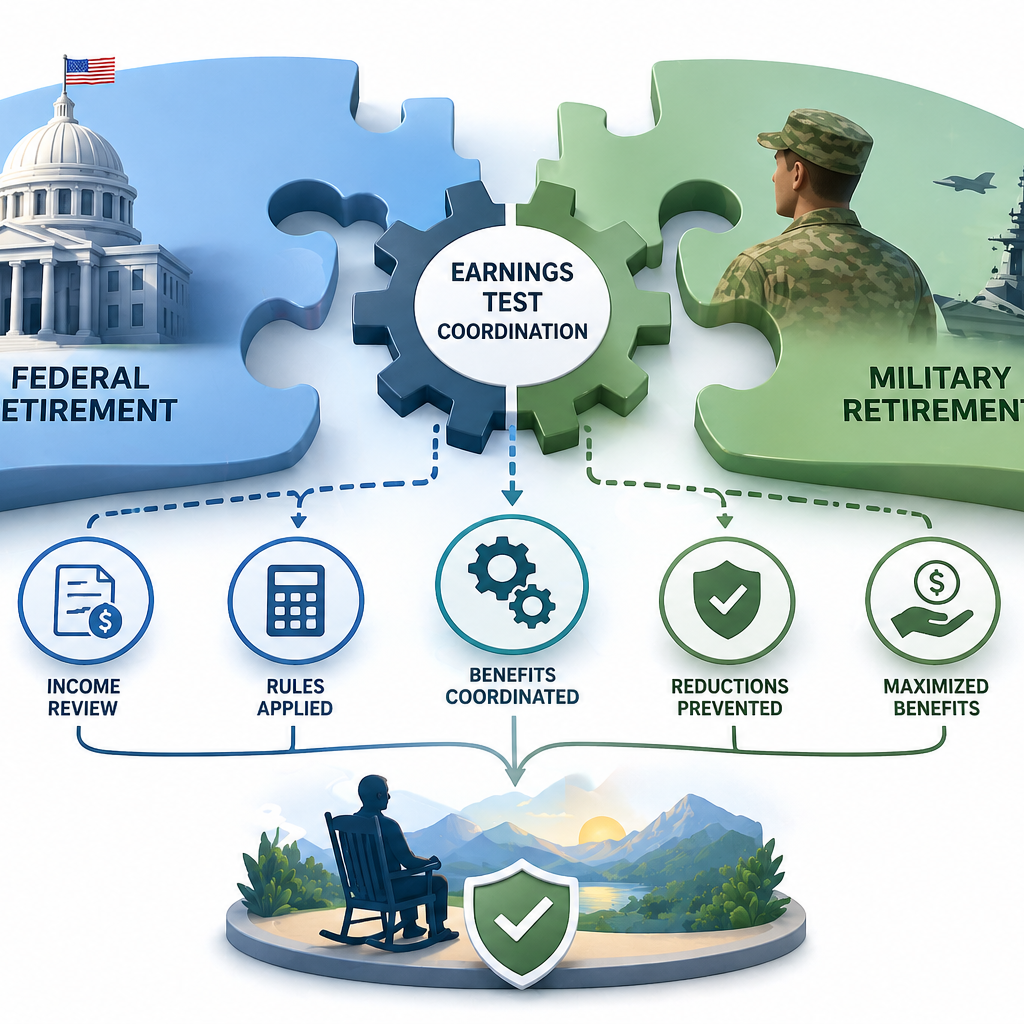
Life after retirement as a federal or military employee brings important decisions about your income. If you work while receiving retirement benefits, coordination of the earnings test may impact what you receive from different programs. Understanding how these rules work ensures you make informed decisions and avoid surprises.
What Is the Earnings Test?
Definition for federal retirees
- Also Read: Phased Retirement Program: Key Steps, Pension Impact, and Eligibility Rules
- Also Read: Survivor Benefits Comparison: Federal, USPS, and Military Eligibility Rules
- Also Read: Case Study: TSP Loans—Eligibility, Repayment, and Retirement Impact Explained
How the earnings test applies to military retirees
Military retirement pay itself typically isn’t reduced based on post-retirement employment. However, like federal retirees, you may receive Social Security, which uses the same earnings test. If you’re a working military retiree under full retirement age and also claim Social Security, your benefit could be affected if your earned income exceeds the threshold.
Why Does Earnings Test Coordination Matter?
Impact on total retirement income
Coordination between the earnings test and various retirement income sources is essential. As a retiree, you may receive payments from your pension, Social Security, and perhaps a Thrift Savings Plan withdrawal. If you start working again, the earnings test may reduce your Social Security temporarily, even while your pension continues unchanged. Effective coordination helps you predict your total monthly income and avoid unintended reductions.
Historical context and recent changes
Historically, different agencies administered retirement programs separately, making it challenging to track working retirees and coordinate earnings test rules. Recent improvements in interagency communication have improved earnings reporting and consistency. Notably, the Windfall Elimination Provision was repealed in 2025, simplifying Social Security calculations for many federal retirees. These evolving rules affect how and when retirees must report income and how benefits are coordinated.
How Does the Earnings Test Affect Benefits?
Timing of benefit reductions
If you’re under full retirement age and your earnings from work exceed Social Security’s annual limits, the Social Security Administration will reduce your monthly benefit. The adjustment typically occurs after you file your tax return for the year in question. It’s important to remember that these reductions are temporary; once you reach full retirement age, your benefit is recalculated and could increase to account for months when payments were withheld.
Interaction with Social Security and pension payments
The earnings test applies most directly to Social Security benefits. Your federal or military pension payments are not reduced by additional employment, but your Social Security check may be. If you receive disability benefits or survivor benefits, separate rules may apply, so coordination becomes even more critical. Understanding these rules can help you plan ahead and avoid shortfalls.
Which Federal Programs Are Impacted?
Overview of federal retirement systems
Two major systems cover most federal employees: the Civil Service Retirement System (CSRS) and the Federal Employees Retirement System (FERS). Military retirees receive benefits through the Department of Defense’s retirement program. While CSRS and military pensions usually aren’t affected by post-retirement earnings, FERS participants most often interact with Social Security, making them vulnerable to the earnings test if they claim benefits early and continue working.
Military retirement program considerations
For military retirees, your fixed pension amount is not reduced if you return to the workforce. However, receiving Social Security before full retirement age brings the earnings test into play if your income from work exceeds defined limits. Recent legislative changes now make it easier for military retirees to track how work affects their combined benefits.
What Is the Coordination Process?
Steps for reporting earnings
Retirees must report their annual earnings to the Social Security Administration. This process usually involves:
- Reporting wages or self-employment income during tax season.
- Notifying Social Security if you expect a significant change in your earnings.
Federal and military retirement program administrators typically do not require you to report your earnings unless you’re enrolled in a specific income-based benefit or program, such as certain disability provisions.
How agencies calculate adjustments
The Social Security Administration reviews reported earnings and calculates any necessary reduction or adjustment to your benefits. If your income exceeds the earnings threshold, your benefit will be adjusted for the following year. Once you reach full retirement age, any withheld benefits are recalculated and may be credited back over your remaining retirement years. Each agency uses its own process for benefit adjustments, but standard guidelines ensure fairness across different retiree groups.
Can Earnings Coordination Change Over Time?
Recent policy updates in 2025–2026
The repeal of the Windfall Elimination Provision in 2025 means federal retirees covered by FERS no longer face a complex reduction in their Social Security benefit. New interagency standards for earnings reporting and benefit coordination have also been introduced to streamline updates. As of 2026, earning thresholds for Social Security remain subject to annual review, and updated guidance is issued each year to reflect cost-of-living changes and statutory updates.
When retirees should review their status
Regular reviews of your employment and retirement income are essential—especially around tax time and when you approach significant birthdays (such as full retirement age). Significant changes in income, employment status, or benefit elections warrant a review of your reported earnings with Social Security. Awareness of new policies helps you stay proactive and avoid benefit interruptions.
FAQs About Earnings Test and Retirement
Common scenarios for federal retirees
Federal retirees often ask whether working part-time after retirement will reduce their pension: only Social Security benefits are potentially affected through an earnings test. No penalty applies to CSRS or FERS pension payments if you work again. Those eligible for both Social Security and FERS should carefully monitor their work-related earnings below age 67 (full retirement age for most).
Frequently asked questions by military retirees
Military retirees are interested in whether their pension will decrease due to outside employment. Generally, your military retirement pay remains stable, but Social Security benefits could be reduced if you claim them before full retirement age and earn more than allowed. The process is automated—simply report your earnings as required, and the agencies coordinate any changes.
How Can Retirees Stay Informed?
Trusted sources for benefit updates
Stay current by checking updates from official sources such as the Social Security Administration, the Office of Personnel Management (OPM), and the Defense Finance and Accounting Service (DFAS). These agencies publish timely guidance reflecting current law, benefits calculators, and coordination practices.
Tips for ongoing retirement planning
You can avoid benefit gaps and maximize your income by reviewing your retirement situation annually. Monitor new policies, changes in earnings thresholds, and agency bulletins. Consider speaking with a retirement benefits specialist from a federal agency for educational guidance. Staying proactive puts you in control of your financial future.