Key Takeaways
- The PSHB program brings changes but does not automatically end FEHB coverage for current dependents.
- Federal retirees and their families can take informed, proactive steps to ensure continued healthcare access under the new system.
Worried that dependents will lose FEHB coverage as the Postal Service Health Benefits (PSHB) program rolls out? You’re not alone. Many federal retirees and their families have questions about what actually changes—and what remains the same. This guide separates fact from common misconceptions, so you can move forward with clarity and confidence.
What Is PSHB?
Overview of Postal Service Health Benefits
- Also Read: Phased Retirement Program: Key Steps, Pension Impact, and Eligibility Rules
- Also Read: Survivor Benefits Comparison: Federal, USPS, and Military Eligibility Rules
- Also Read: Case Study: TSP Loans—Eligibility, Repayment, and Retirement Impact Explained
Comparison to FEHB basics
The Federal Employees Health Benefits (FEHB) program has long served federal workers, retirees, and eligible dependents, offering a selection of health insurance plans from various national and regional providers. While PSHB will mirror many core FEHB features, it operates as a separate program. This means postal retirees and their dependents will enroll in PSHB-specific plans, while other federal retirees continue with FEHB. Coverage standards and access to broad healthcare networks remain integral to both systems.
Who Qualifies as a FEHB Dependent?
Defining eligible dependents
FEHB, and now PSHB, define eligible dependents primarily as:
- Legally married spouses
- Children under age 26, including biological, adopted, and stepchildren
- Certain disabled adult children, if they meet strict dependency and incapacity requirements
Proof of dependency or eligibility may be requested during enrollment or qualifying events, so you’ll want to keep documentation current.
Changes under PSHB transition
The eligibility guidelines for dependents are not greatly altered under PSHB, but how enrollment happens may be different. As PSHB launches, current FEHB dependents of postal retirees will move to PSHB, with the same definitions applied. It’s important to note that eligibility does not automatically expand or contract; rather, the mechanism for verifying and maintaining dependent status becomes administratively distinct from general FEHB processes.
How Does PSHB Change FEHB Coverage?
Coverage overlap and distinctions
If you’re a postal retiree, your healthcare coverage shifts from FEHB to PSHB. The structure of benefits remains similar, but the pool of available plans and networks may change. For most FEHB dependents, this means choosing from PSHB-offered plans, which closely resemble previous FEHB options but operate within the postal-specific system.
Dependents of federal retirees not connected to USPS will stay with FEHB. There is no crossover between programs except for those directly affiliated with USPS.
Enrollment rules explained
Enrollment for PSHB works like FEHB’s Open Season and qualifying life event structure. Eligible dependents must be listed during annual enrollment or upon qualifying events (marriage, birth, adoption). Special transition periods may allow for reassessment of dependent status to ensure everyone who qualifies can be properly enrolled under the new system.
Does PSHB Affect Dependent Health Choices?
Plan selection options for dependents
Eligible dependents of postal retirees will select from PSHB plans, not the full FEHB menu. Each PSHB plan outlines its own coverage benefits, premiums, and provider networks. Dependents still have choices among several reputable options, ensuring reasonable variety in plan features—including HMOs, PPOs, and national vs. regional plans.
Impact on existing healthcare access
Most dependents will experience little or no interruption in care. If current providers are included in the PSHB plan network, continue your care as usual. In rare cases, it may be necessary to select a new provider if your current one is outside the new network. It’s wise to verify provider inclusion before finalizing elections during enrollment.
What Are Common Myths About PSHB?
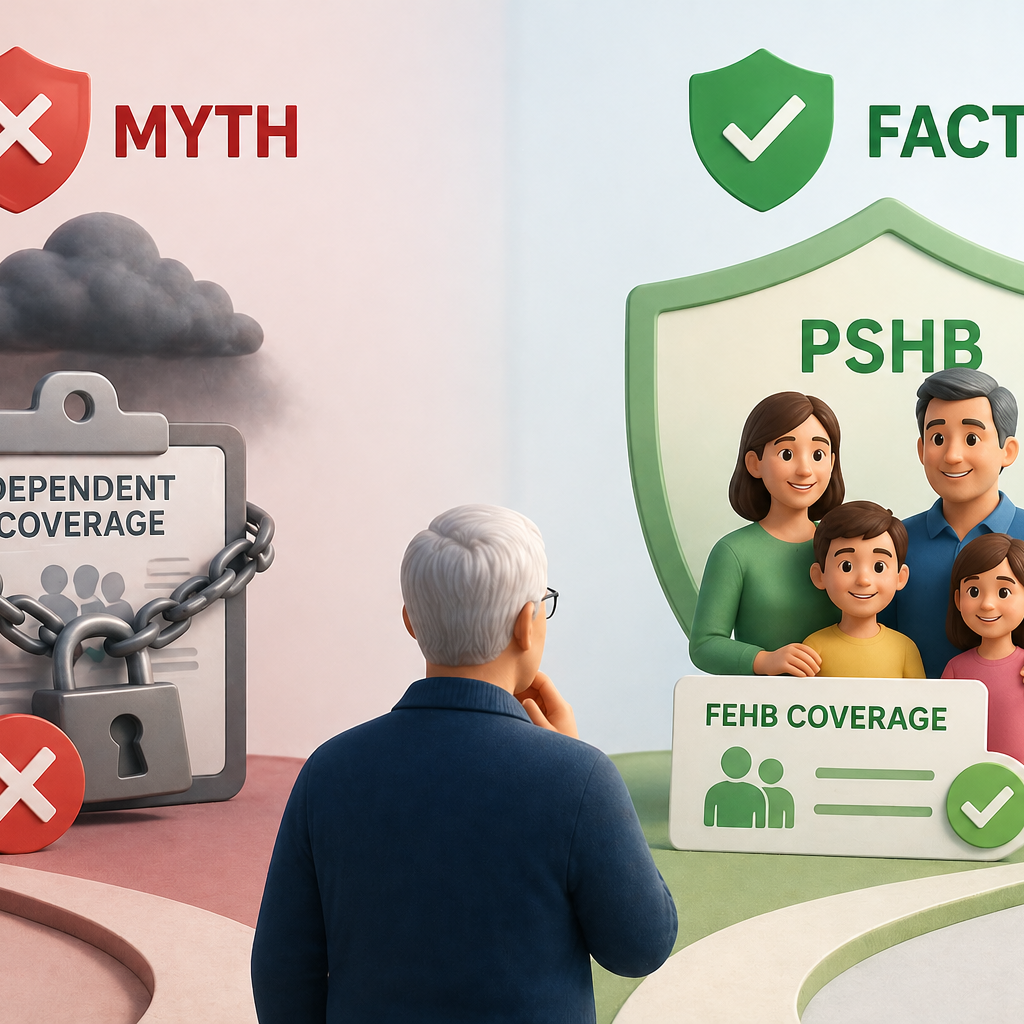
Myth: All dependents must switch plans
Only dependents of postal retirees move from FEHB to PSHB. Federal retirees not affiliated with USPS, and their dependents, remain on FEHB. No universal switch applies to all federal dependents.
Myth: Current FEHB coverage is lost
Transferring to PSHB does not mean you lose health coverage. Your coverage will continue, albeit under a new program (for postal-connected families), with similar rules and protections. Key eligibility and coverage safeguards remain in place.
Myth: PSHB costs more for dependents
There is no blanket increase for dependents under PSHB. Costs vary based on plan choice, just as with FEHB. Some families may see similar out-of-pocket expenses or differences depending on plan features and networks, but there are protections against sharp hikes for comparable coverage types.
What Facts Should Retirees Know?
Eligibility rules for dependents
Eligibility for coverage as a dependent remains anchored to legal relationships and age restrictions. Disabled adult children can continue coverage with appropriate documentation. Spouses and children under 26 remain eligible as before.
Continuation of coverage explained
No dependent is left without coverage provided guidelines are followed and timely enrollment occurs. Transitional support ensures that dependents seamlessly shift to PSHB with no significant gaps.
Frequently overlooked details
Open Season deadlines are critical. Be proactive in checking your dependent’s eligibility and plan options early. Review communication from USPS and OPM for PSHB plan brochures and new enrollment instructions to prevent missteps or coverage lapses.
Are Special Circumstances Handled Differently?
Addressing unique family or retiree cases
Special family or retiree circumstances—such as court-ordered dependent coverage or guardianship situations—are supported under PSHB policies just as they were in FEHB. It’s essential to communicate any unique scenarios to your benefits administrator to ensure uninterrupted coverage.
Special enrollment and appeals
If your family experiences a qualifying life event, special enrollment windows allow you to add eligible dependents outside typical enrollment periods. Appeals processes are in place for disputes around eligibility or coverage, providing federal retirees and their families with resources for review and support.
How Can Dependents Prepare for Changes?
Steps to review status and eligibility
Start by reviewing all communications from your plan administrator and USPS/OPM. Confirm each dependent’s eligibility and be ready to provide documentation if required. Make a habit of checking for updates ahead of Open Season to avoid last-minute surprises.
Resources for further education
Take advantage of official resources such as OPM’s PSHB information page, USPS retiree web portals, and educational seminars held for affected beneficiaries. Reaching out to your human resources or personnel liaison can also yield personalized guidance specific to your situation.